The 12 Houses in Astrology: A Complete Guide to What Each House Means in Your Birth Chart

Most people who get into astrology start with their sun sign, then learn their moon and rising. But there is a third layer that ties the whole birth chart together, and it tends to get skipped: the houses. If the planets are the actors and the zodiac signs are the personalities those actors play, the twelve houses are the rooms of the building where the story actually happens. A planet tells you what energy is at work. A sign tells you how that energy expresses itself. A house tells you where in your life it shows up.
That last piece is what makes a chart personal. Two people can both have Mars in Aries, but if one has it in the second house of money and the other has it in the seventh house of partnership, those two lives look nothing alike. This guide walks through all twelve houses, what each one rules, and how to start reading them in your own chart.
What Are the Houses in Astrology?
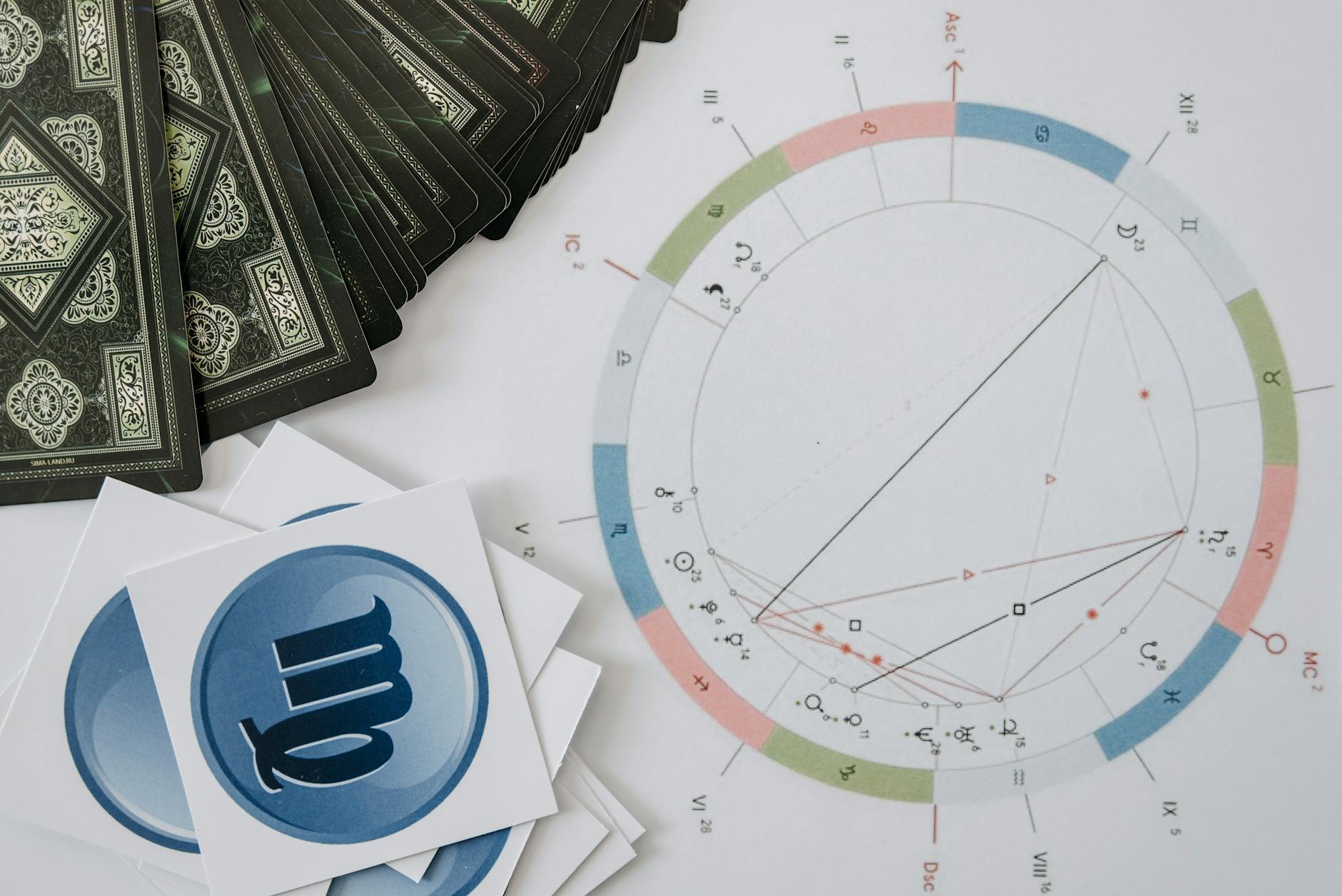
The birth chart is a 360-degree wheel divided into twelve equal slices of 30 degrees each. Each slice is a house, and each house governs a specific area of life, from your identity to your career to your hidden fears. The planets fall into these houses based on the exact time and place you were born, which is why your birth time matters so much. Get the time wrong by a couple of hours and the planets can land in entirely different houses.
The wheel does not start at the top. It starts on the left side, at the horizon line, with your Ascendant, also called your rising sign. The Ascendant marks the cusp of the first house, and the houses are numbered counterclockwise from there. This is why your rising sign sets the whole layout of your chart: it decides which sign rules each house and where every planet lands.
Angular, Succedent, and Cadent Houses
Before the individual meanings, it helps to know that the houses group into three types based on how active they feel.
- Angular houses (1st, 4th, 7th, 10th) sit at the four corners of the chart and carry the most punch. Planets here tend to shape your life in obvious, outward ways.
- Succedent houses (2nd, 5th, 8th, 11th) follow the angular ones and deal with what you build, value, and hold onto.
- Cadent houses (3rd, 6th, 9th, 12th) are about learning, adjusting, and processing. Planets here work more on the mental and behind-the-scenes level.
The 12 Houses and What They Mean
First House: Self and Identity
The first house is you. It rules your appearance, your physical body, the energy you give off, and the first impression you make before you even open your mouth. The sign on your first house cusp is your rising sign, and any planet sitting here colors how the world sees you. A Mars in the first house person walks in with force; a Venus in the first house person walks in with charm.
Second House: Money, Values, and Self-Worth
The second house covers your income, possessions, and the resources you build to feel secure. But it goes deeper than a bank balance. This house also reveals what you truly value and how steady your sense of self-worth is. Planets here can show whether money comes easily, whether you spend or save, and what you consider worth holding onto.
Third House: Communication and the Mind
This is the house of how you think, speak, and process information. It rules everyday communication, writing, short trips, your phone and devices, and your relationship with siblings and neighbors. A busy third house often points to a curious, talkative person who is always learning something new and rarely sits still mentally.
Fourth House: Home, Family, and Roots
At the very bottom of the chart sits the fourth house, the foundation of everything. It rules your home, your family, your private life, and your emotional base, especially the influence of a parent and the household you grew up in. This house describes where you feel safe and what home means to you, both the one you came from and the one you create.
Fifth House: Creativity, Romance, and Play
The fifth house is where you have fun. It rules romance and dating, creative self-expression, hobbies, performance, and children. This is the house of joy and risk, the part of you that wants to flirt, create, and play without worrying about the outcome. Planets here show how you love to express yourself and what lights you up.
Sixth House: Work, Health, and Routine
The sixth house governs your daily grind: your job (the day-to-day tasks rather than the career legacy), your health and habits, and the routines that keep your life running. It is the house of service and self-improvement. A strong sixth house often belongs to someone detail-oriented who finds meaning in being useful and keeping things in order.
Seventh House: Partnership and Marriage
Directly across from the first house, the seventh house is all about one-on-one relationships. It rules marriage, committed partnerships, business partners, and even open enemies. The sign and planets here describe what you look for in a partner and the dynamics you tend to attract. If the first house is "me," the seventh house is "us."
Eighth House: Transformation, Intimacy, and Shared Resources
The eighth house is one of the most intense in the chart. It rules deep intimacy, sex, death and rebirth, psychological transformation, and shared resources like inheritances, taxes, debt, and a partner's money. This is the house of merging with another person on every level and of the profound changes that reshape who you are.
Ninth House: Beliefs, Travel, and Higher Learning
The ninth house expands your world. It rules long-distance travel, foreign cultures, higher education, philosophy, religion, and your personal search for meaning. Where the third house is about local, everyday learning, the ninth is about the big picture: the beliefs that shape your worldview and the journeys that broaden it.
Tenth House: Career, Reputation, and Public Image
At the very top of the chart, the tenth house is the most visible point of all. It rules your career, your public reputation, your ambitions, and the legacy you want to leave. The cusp of this house is your Midheaven, a key marker of your vocation and how the world recognizes you. Planets here often point to where you are meant to be seen and what you will be known for.
Eleventh House: Friendships, Community, and Hopes
The eleventh house is about your wider network: friendships, groups, communities, and the causes you care about. It also rules your hopes and long-term wishes for the future. This is the house of belonging to something bigger than yourself, whether that is a tight friend group, a professional network, or a movement you believe in.
Twelfth House: The Unconscious, Solitude, and the Hidden
The final house is the most mysterious. The twelfth house rules the unconscious mind, dreams, secrets, solitude, and everything that happens behind the scenes. It is associated with what we hide, even from ourselves, and with spiritual surrender and endings. Planets here often work quietly, shaping you from the inside in ways that are hard to see but deeply felt.
How to Find Your Houses
To read your houses accurately, you need three things: your birth date, your exact birth time, and your birth city. Plug these into any free birth chart calculator and it will generate your full wheel, showing which sign rules each house and where every planet falls. Without an accurate birth time, the house placements are essentially guesswork, since the houses shift roughly one degree every four minutes.
Once you have your chart, look for two things first. Notice which houses contain planets, because those are the life areas getting the most cosmic attention. Then look at the sign on each house cusp, which tells you the flavor that area of life carries for you.
What About Empty Houses?
Here is a relief for anyone who just discovered half their houses are empty: it is completely normal. You only have about ten planets and points to spread across twelve houses, so empty houses are guaranteed for everyone. An empty house does not mean that area of life is missing or broken. It simply means the matters of that house run more on autopilot, guided by the sign on its cusp and the planet that rules that sign, rather than being a major focal point of your chart.
Bringing It All Together
The houses are what turn a generic horoscope into a reading that is unmistakably yours. Once you can layer all three pieces together, the chart starts to speak in full sentences. A planet shows the energy, the sign shows the style, and the house shows the stage where it plays out. Start with the houses that hold your sun, moon, and rising ruler, get familiar with those few rooms, and the rest of the chart will open up from there.
Your birth chart is a map of where your energy wants to flow. The twelve houses are simply the addresses on that map, and learning to read them is one of the most rewarding steps in understanding yourself through astrology.
Want your free daily reading?
Start free